The summer heat in Florida can be quite intense. With humidity that is often above 80% and heat in the 90s from May – October growing many plants outside can be tricky. Some of those plants are leafy greens. We love the taste of home grown leafy greens. Not only do we know they are organic when we grow them, but can pick them at varying levels of growth. Salads can be filled with every type of leaf from micro green to a full head of romaine.
When temperatures begin to routinely reach 85 – 90 degrees Fahrenheit it can cause leafy greens to bolt quickly and develop a bitter taste. In central Florida it is recommended to grow lettuces from September to February. When it gets well into summer I seem to always want leafy greens and salads. I hate having to always purchase them from the grocery store. I knew that leafy greens could be successfully grown inside during the hottest months of the year in a window or under a grow light so I decided to give it a try.
In reviewing my space and knowing the habits of my household I knew a window wouldn’t work. Many days the windows end up staying covered to reduce the heat in the house, and they were not in a good location to adequately give light to plants. Several windows are blocked by the overhang of the porch and do not receive a large amount of light or they are in an awkward spot like high or in a bedroom without a good surface or windowsill to put the plant. I decided to purchase a grow light – here are some things I looked for in making my decision
What to look for in a grow light
Bulb Type
You can get a bulb or a fixture. I recommend a fixture if you are wanting to grow several different types of greens or plants as you will have the space to do it. A bulb will work if you have an existing lamp and only a plant or two you need to light.
Light Temperature
Natural sunlight is about 6500 Kelvin. If you do not have any natural light of all in your space getting a light that is as close to 6500 Kelvin as possible will be ideal – the one I chose is 5000 Kelvin.
Light Colors
Light is not just one color. There are colors within light like red and blue. Many are becoming more aware of the effects that to much blue light have on the human body, but plants also need these different colors of light to experience adequate growth.
Blue light is responsible for the leafy growth of the plant which make it perfect for seedlings. Additionally, herbs and vegetables utilize the blue light to be productive.
Red Light is needed for the plant to produce fruit that sets and mature correctly.
Growing a plant inside requires all spectrums of light so it would be helpful to have a light that has red, blue, and white wavelengths.
To be considered full spectrum look for the light to contain blue light in the range of 400-550 nanometer and red light in the range of 610-720 spectrum.
Best type of light to buy
LED – use less energy and stay cooler. There are options in full spectrum light as well as isolated blue or red color range. They also last quite a long time.
High Output Fluorescent Lights – Also stay cooler and come in either t-5 fluorescent bulbs – like a long skinny shop light or as a compact florescent bulb. They can also last a long time.
Halogen – Usually this will be found as a bulb to put in an existing fixture. It can also become very hot and burn the plants. Typically it is not recommended any longer.
I chose a LED grow light that not only was full spectrum but had specific red and blue wavelengths. I got the DYMOND BoostGro LED Seed Starter Grow Light from Amazon and not only do the two connect into each other, but they were easy to install on my metal shelf we purchased for seedlings and growing some inside as needed. So far I’ve been pretty happy with the light especially that I can use one switch to turn them on and off together.
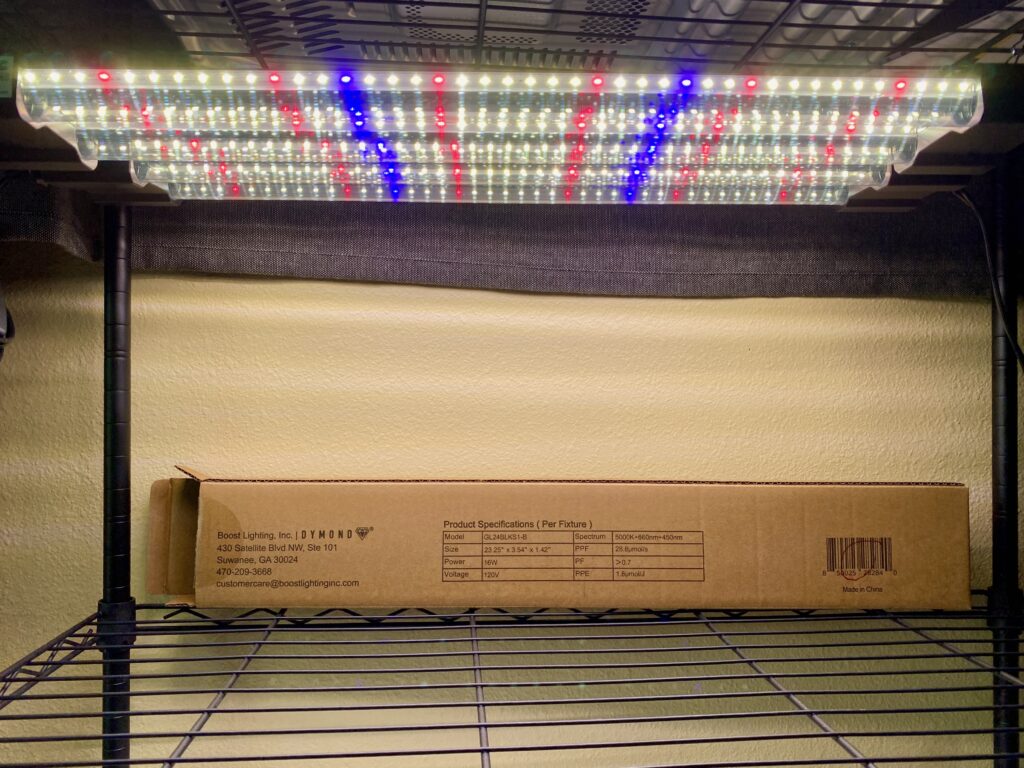
Once your light is installed add the planted pots. Plan to keep the light on for about 12 hours. This will help seedlings establish primary leaves. The plants also need a period of at least 8 hours of darkness to improve growth. Soil also needs to be around 70-75 degrees for optimal growth. Always place the light close to the soil or plants. If the light is more than 2-4 inches away from the plant then it will become spindly as the plant reaches for the light.
My Grow Light Planting Project
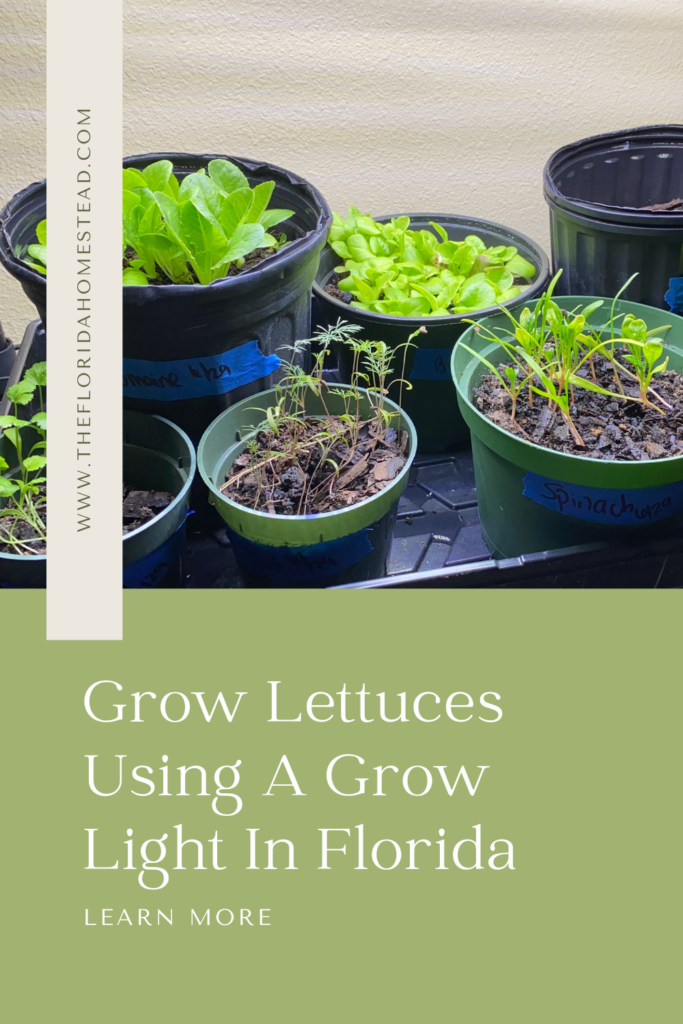
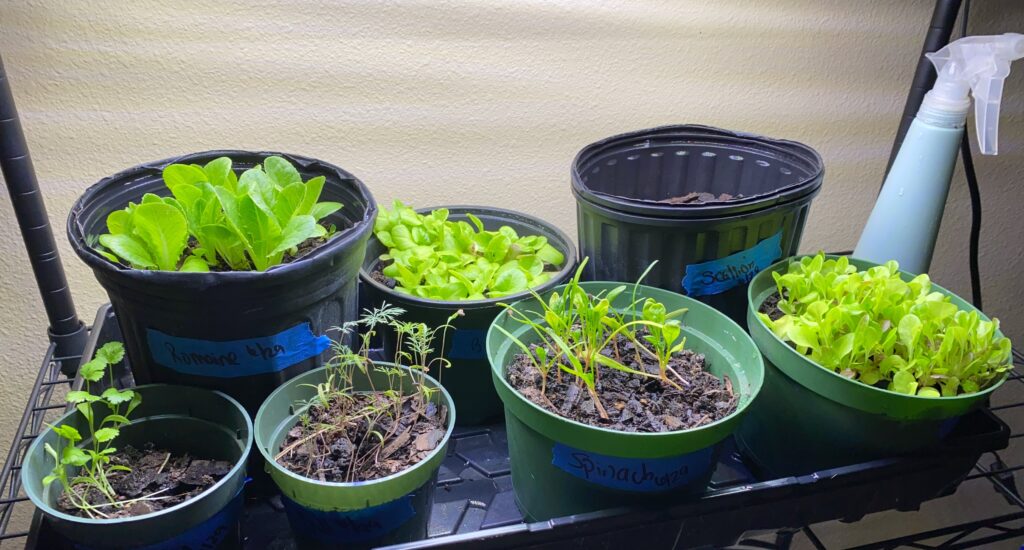
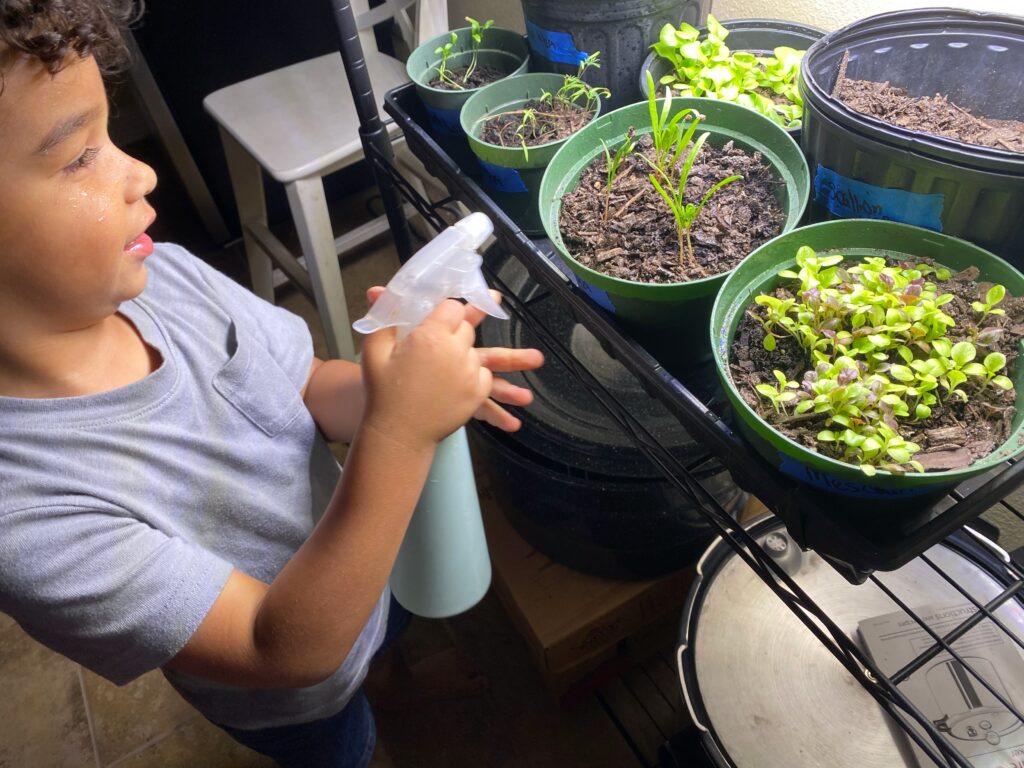
I used leftover nursery pots that I had and placed them in a tray to catch any extra water. They are pretty deep which isn’t super necessary for growing greens, but I was utilizing what I had on hand. I wanted to be able to plant a few different varieties to check out as well as start a couple more herbs. I used a mix of Jungle Growth Organic Garden Mix with a couple scoops of Black Kow to add a little more nutrients. I chose then instead of a seed starting mix purely as an experiment to see how well it would work. Plus the garden mix also provides a bit more nutrition for the plant as it grows and a seed starting mix typically doesn’t have long term nutrition mixed in.

Planted the following varieties on June 29th
- Boomsdale Spinach
- Buttercrunch Lettuce
- Mesclun lettuce blend
- Spring Onion
- Cilantro
- Dill
- Romaine
Everything except the spring onion sprouted within 5 days and continued growing quickly.

After 5 weeks I cut the Mesclun lettuce and added it to a meal. The other lettuces were also large enough to cut and add to salads. One of the flaws I had was I did plant densely and did not thin the greens which probably impeded growth. The spinach also grew well at first and just didn’t grow much after getting a couple true leaves. It could probably have used a little liquid fertilizer.
By the end of August everything was growing except the spring onion. I tried replanting a few weeks later and they just never took. So my conclusion is that those seeds either do not respond well to this method of planting or the seeds are bad. I may plant them outside as the weather gets cooler and see if they sprout.
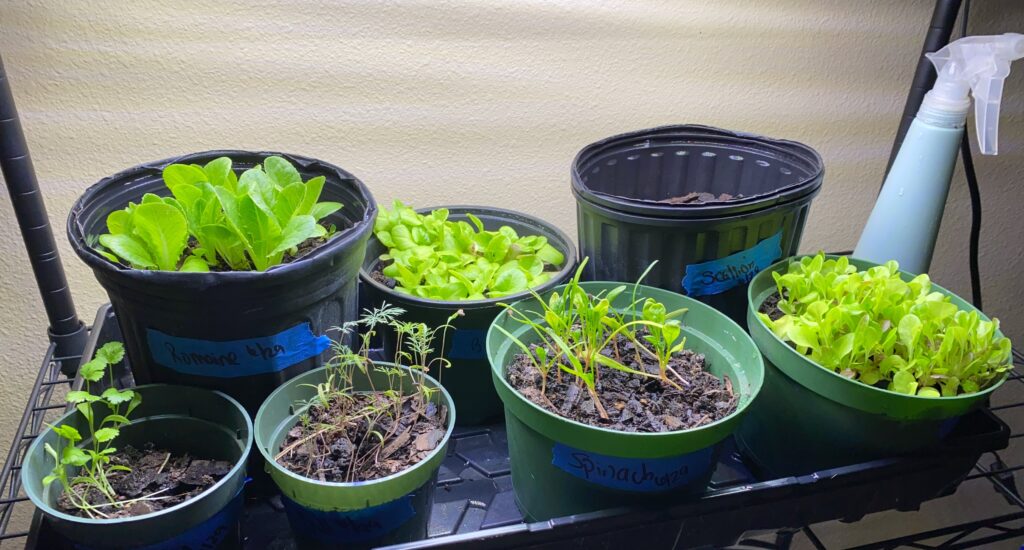
This will never replace lettuce from the grocery store and we will continue to grow lettuce greens throughout the cooler months in Florida. However it has been a very fun experiment and I will probably continue to grow under the grow light to supplement our salad purchases through the hotter months.
This was also very easy to do in our rental since I was able to set it up inside and utilize the grow lights since our house has less usable windows. I’d like to continue to figure out the best way to grow some of these supplemental greens throughout the summer in the most time and cost efficient way.
Have you ever tried to grow greens inside? What method have you used and what was your success rate? Let me know in the comments!